Flowws MCP
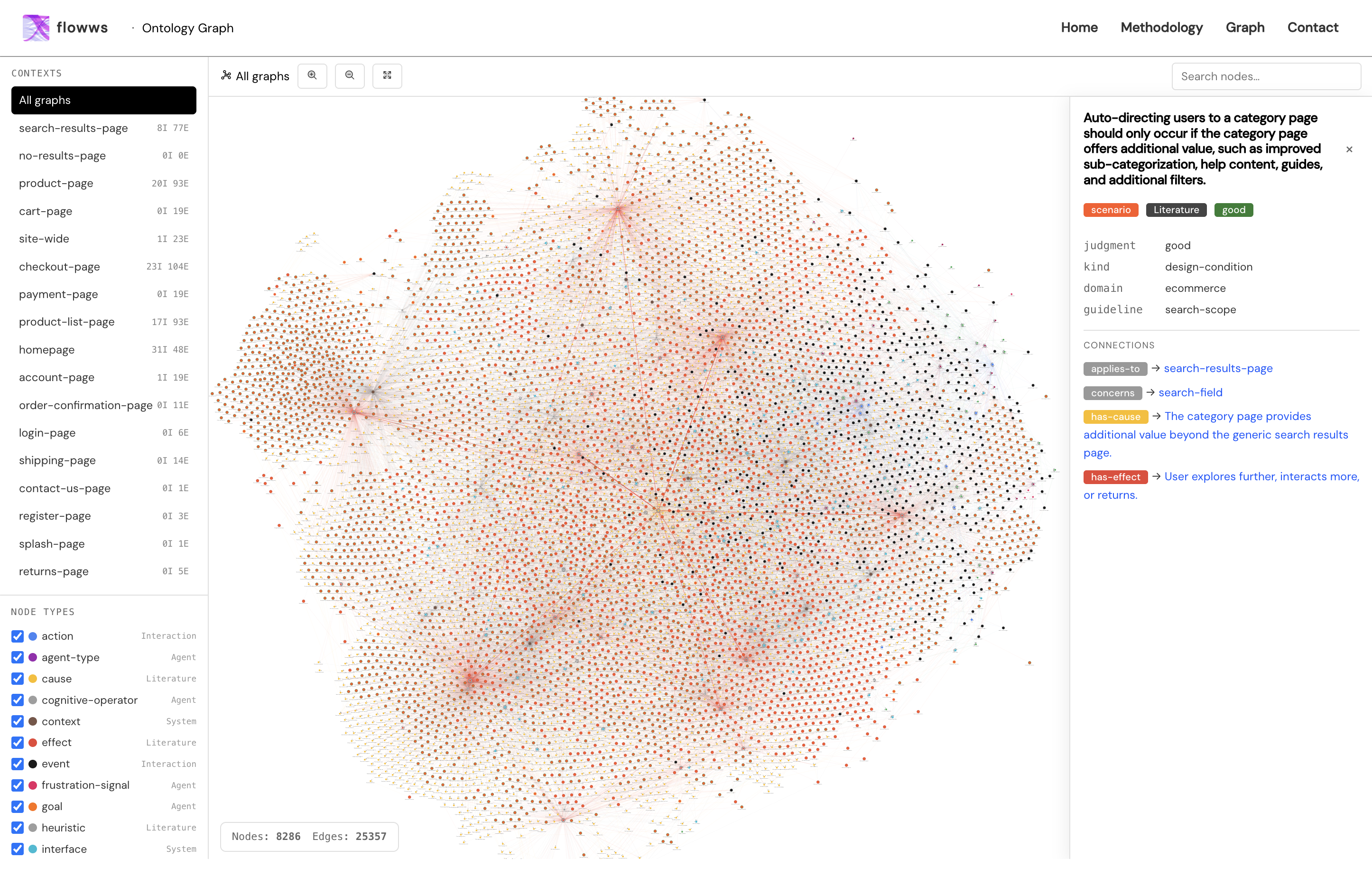
A computable UX knowledge system — HCI research encoded as a graph with every citation verified against its source, exposed to Claude Code through an MCP server so evidence lands in a developer's context window exactly when they need it.
The Problem
UX knowledge exists as prose. Baymard publishes 650+ guidelines. Nielsen Norman has 450+ articles. Google has playbooks. A developer building a search component can't query any of it. A designer can't ask it why a layout causes friction. An automated system can't reason about it at all.
Flowws makes UX knowledge computable: research parsed into a graph of interactions, every claim traceable to the exact sentence it came from, served to an AI at the moment it writes code.
The Interaction as Unit of Analysis
Most tools treat the page as the unit. GA4 measures sessions per page. Lighthouse scores a page. Heatmaps show a page.
Flowws treats the interaction: a user, in a context, performing an action on a component, arriving at one of several possible outcomes. Each state has a quality judgment, a causal chain, and literature evidence. Two-thirds of the corpus describes perception and comprehension failures — the user never finds the element, or can't predict what it will do. GOMS operators from cognitive psychology model these as first-class nodes, so "users never noticed the map toggle" is captured as precisely as "users clicked submit."

Citations You Can Trust
Language models are useful extractors and unreliable quoters — they reconstruct fluent sentences and present them as verbatim. For a system whose entire value is citations, that's fatal.
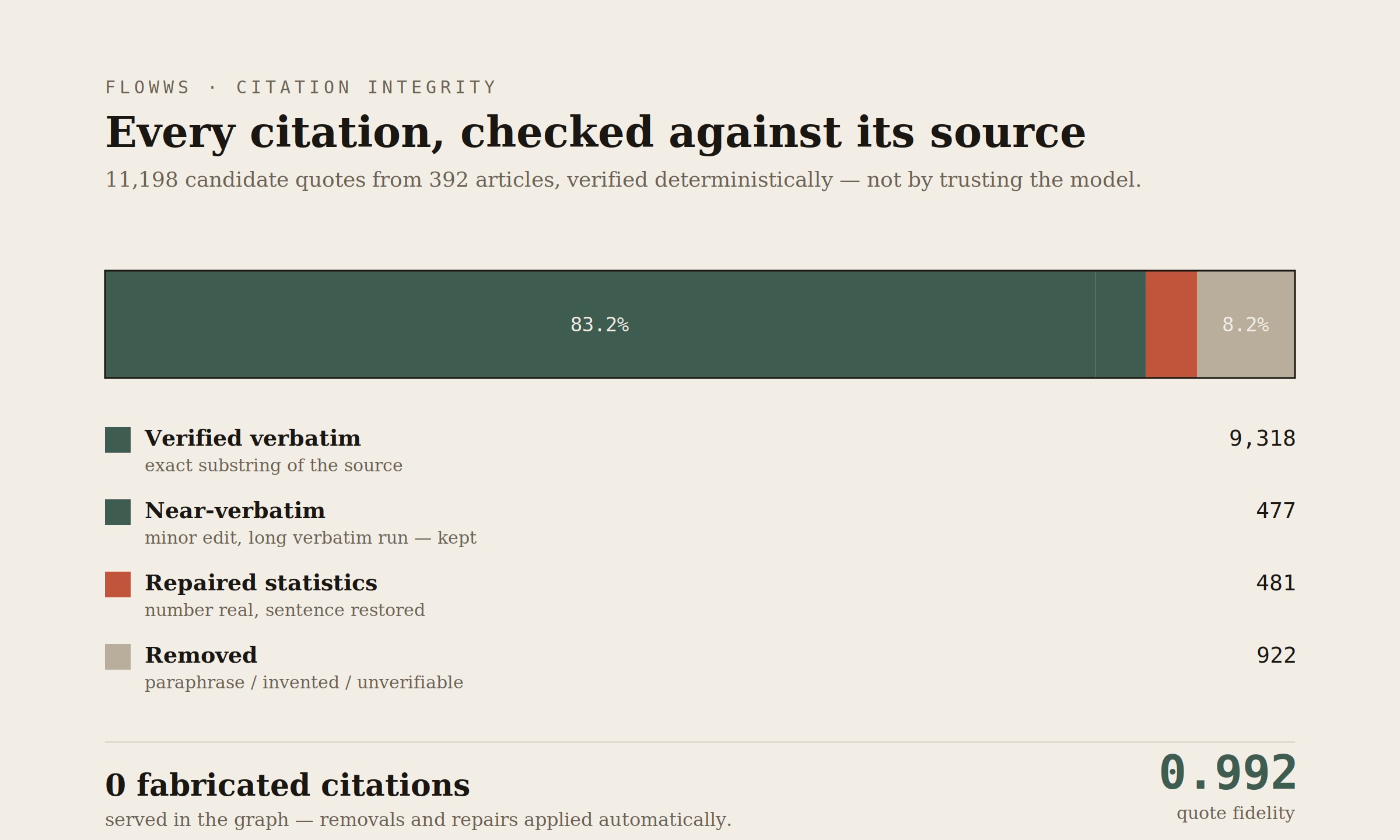
Every passage the model produces is checked character by character against the source article. Quotes that don't exist are removed. Reworded statistics are repaired back to the true sentence. Numbers that appear nowhere in the source are dropped. Across 11,000+ candidate quotes: zero fabricated citations in the served graph. The verifier is deterministic and re-runnable — the guarantee is mechanical, not a matter of trusting the model.
MCP Server for Claude Code
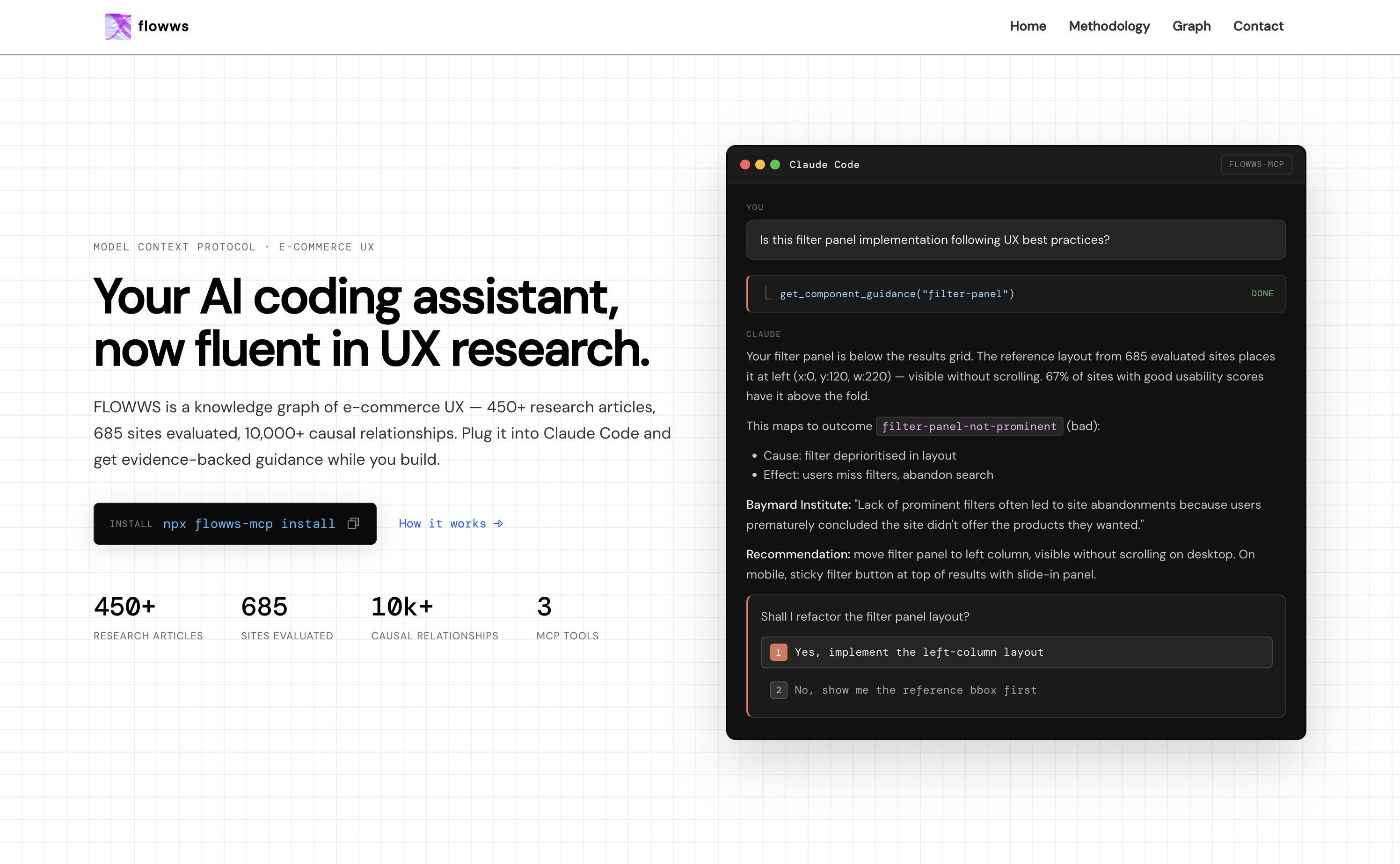
The graph is exposed as tools Claude Code calls during development.
get_component_guidance("search-input") returns the evidence base
for a component across the whole corpus: pitfalls, heuristic clusters, pages
it appears on, source-linked citations. get_page_flows audits a
page type. query_by_heuristic pulls a failure class across every
article at once.
When a developer asks whether their search results page follows best practice, Claude calls the tools, gets the causal chains for the components in scope, and cites the specific passage that applies — with a title and URL a reader can open. The design argument that used to end with "that's just best practice" now ends with a reference.
Who This Is For
Developers who want UX evidence in the editor, cited, not in a PDF nobody reopens. E-commerce teams who need to know where their site sits relative to the research. Agencies pitching audits who need traceable sources, not opinions.
Next: a screenshot pipeline that detects UI components on real sites, records bounding boxes keyed to the same component names the graph uses, and grounds spatial reasoning in what real pages actually do. The bridge from knowledge base to automated auditor.
Want your niche mapped — or your site benchmarked against the research? Let's talk.